Trees add shade, beauty, and natural character to properties in Rockfall, Connecticut. However, like other living plants, trees can experience stress, disease, and damage that affect their health. Sometimes the warning signs are easy to notice, such as dead branches or missing leaves. Other times, the changes develop slowly and may go unnoticed for months. Understanding the signs of a dying tree in Rockfall, CT, can help homeowners identify potential problems early and decide when professional attention is needed.
Why Is It Important to Recognize a Dying Tree?
A declining tree does not always need to be removed. Some trees can recover when the underlying problem is identified and addressed early. However, serious decay or structural damage can increase the risk of falling branches or tree failure. Recognizing dying tree symptoms helps homeowners protect their property and make informed decisions about tree maintenance.
1. Dead or Falling Branches
One of the most noticeable warning signs is an increasing number of dead branches. Healthy trees may naturally shed small branches, but large dead limbs or extensive branch dieback can indicate a problem.
What Should You Look For?
Watch for:
- Branches without leaves during the growing season
- Brittle twigs that break easily
- Large dead limbs in the upper canopy
- Repeated branch loss without severe weather
Dead branches can result from disease, drought, root damage, or other environmental conditions. Avoid standing beneath large damaged limbs, and never attempt to remove branches near power lines.
2. Peeling Bark or Cracks in the Trunk
Tree bark protects the living tissues beneath it. Some species naturally shed bark, so peeling alone does not necessarily mean a tree is unhealthy. However, unusual bark loss, deep cracks, or exposed damaged wood may indicate stress or structural problems.
When Is Bark Damage Concerning?
Pay attention to large areas of missing bark, expanding cracks, or damaged sections that expose decaying wood. These conditions deserve closer examination, especially when combined with declining branches or unusual leaf growth.
3. Fungal Growth Around the Trunk
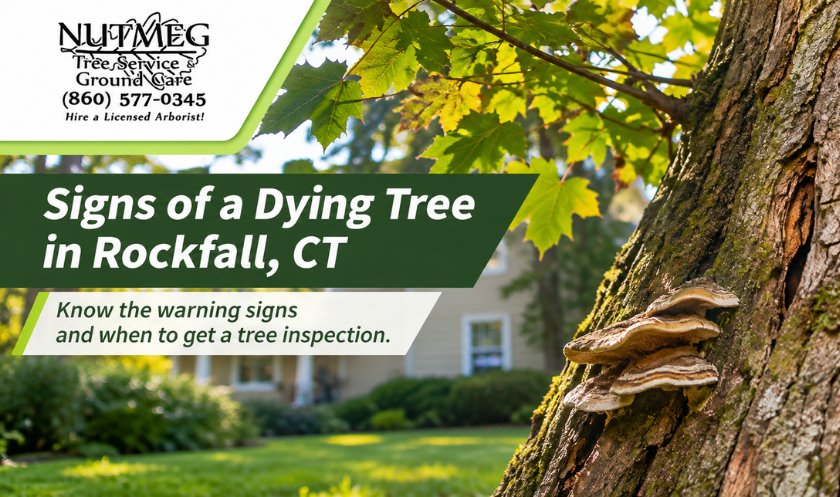
Mushrooms or other fungal structures growing near a tree’s base can sometimes indicate decaying wood or roots. Not every fungus is harmful. Many fungi naturally grow in soil and help break down organic material. However, certain fungi growing directly from the trunk or root flare may suggest internal decay.
What Should Homeowners Do?
Avoid removing the visible fungus and assuming the problem is solved. A professional tree health inspection can help determine whether decay is present and whether the tree’s stability may be affected.
4. Unusual Leaf Loss or Discoloration
Trees naturally lose their leaves during autumn in Connecticut. However, significant leaf loss during spring or summer may indicate an underlying problem.
Common Signs of Tree Stress
Look for:
- Leaves turning yellow or brown earlier than expected
- Wilting despite adequate soil moisture
- Smaller leaves than in previous years
- Bare branches during the growing season
- Leaves developing unusual spots or damage
These changes may result from drought, excess moisture, insects, disease, or root problems. A single symptom does not confirm that a tree is dying.
5. Thinning or Uneven Tree Canopy
A healthy tree generally produces foliage consistent with its species, age, and growing conditions. When sections of the canopy become noticeably thin, the tree may be experiencing stress.
What Causes Canopy Thinning?
Possible causes include compacted soil, damaged roots, water shortages, pests, and disease. Compare the tree’s current appearance with previous growing seasons. If thinning continues or spreads, further evaluation may be necessary.
6. Signs of Tree Disease
Different diseases affect trees in different ways. Some common signs of tree disease include unusual leaf spots, branch dieback, cankers, discolored bark, and abnormal growth. However, insects, weather damage, and poor soil conditions can create similar symptoms. Correct identification is important because treatments depend on the actual cause.
Can a Stressed Tree Recover?
Yes, some stressed trees can recover with appropriate care. For example, temporary drought stress may improve when soil moisture conditions return to normal. Other problems, such as extensive root damage or advanced decay, may be more difficult to address.
Practical Tree Care Tips
Homeowners can support tree health by:
- Watering appropriately during extended dry periods
- Applying mulch without piling it against the trunk
- Avoiding soil compaction around roots
- Protecting trunks from lawn equipment
- Monitoring changes throughout the growing season
For more guidance, explore tree care and maintenance services near Rockfall, CT.
When Should You Schedule a Professional Tree Assessment?
Consider a professional assessment when a tree develops extensive dead branches, significant trunk damage, fungal growth associated with decay, or rapid canopy decline. A newly leaning tree, exposed roots, or major cracks may require more urgent attention. A qualified tree care professional can evaluate the tree’s condition and explain whether pruning, monitoring, treatment, or removal should be considered.
Final Thoughts
Recognizing a declining tree early can help homeowners make better decisions about maintenance and safety. Dead branches, unusual bark damage, fungal growth, early leaf loss, and canopy thinning are important warning signs, but they do not always mean a tree is beyond recovery. For homeowners in Rockfall, CT, regular observation and timely professional assessment can help maintain healthier trees.
Learn more about local tree care through Nutmeg Tree Service and Ground Care.