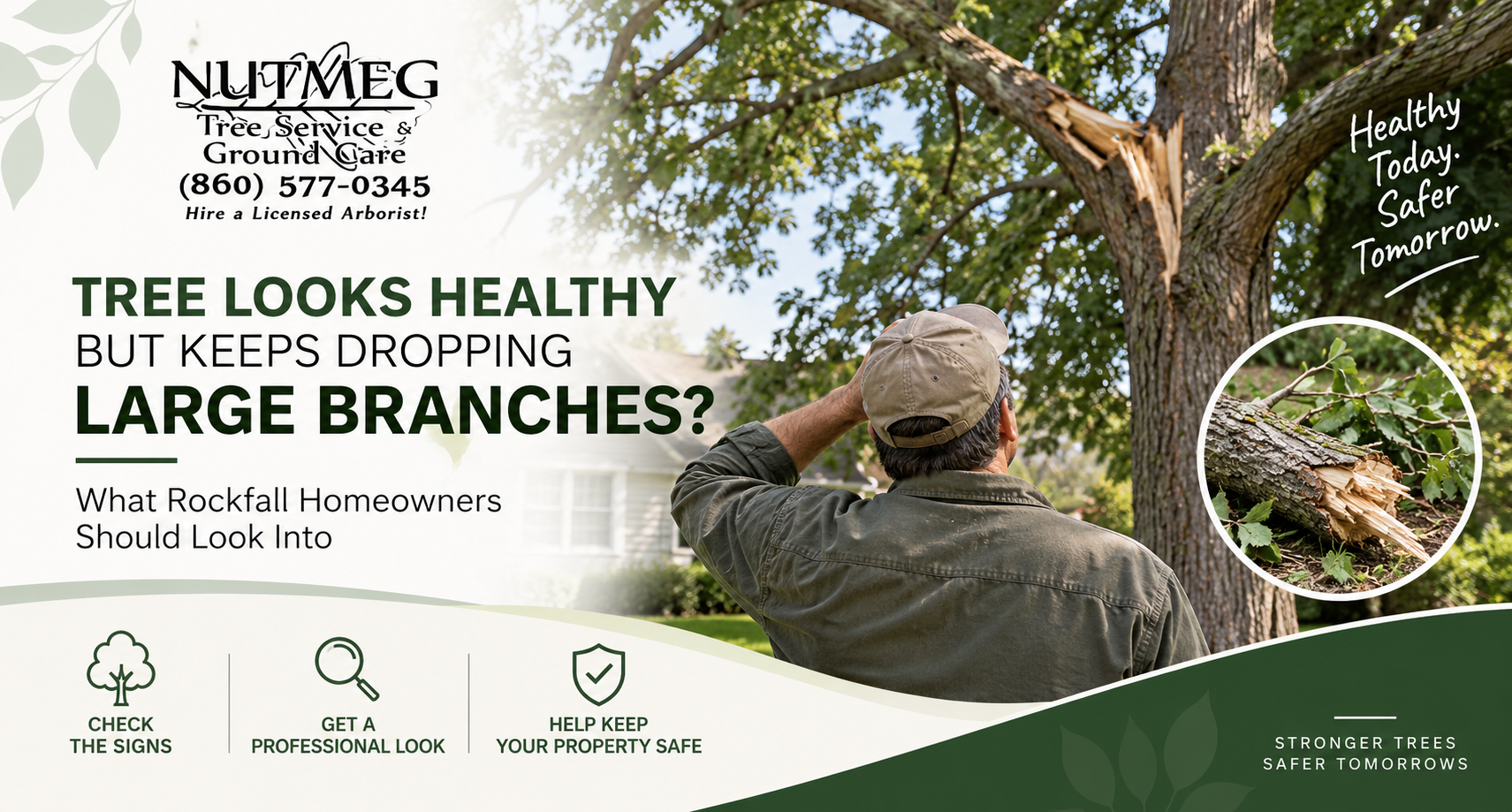
A tree can look green, full, and healthy from the ground while still having problems hidden within its branches, trunk, or root system. For homeowners in Rockfall, finding a large branch on the lawn can be concerning, especially when there was no major storm and the tree otherwise appears normal.
One fallen branch does not always mean the entire tree is unhealthy or needs to be removed. However, repeated branch loss should not be ignored. Understanding why branches may fall can help homeowners recognize changes early and decide when a closer tree assessment may be appropriate.
Green Leaves Don’t Tell the Whole Story
Healthy-looking leaves are a positive sign, but they do not provide a complete picture of a tree’s condition. Individual branches can become weak, damaged, or partially dead while the rest of the canopy continues producing normal leaves.
Problems may also develop where large branches connect to the trunk. From the ground, these areas can be difficult to inspect closely.
This is why homeowners should look beyond leaf color and consider the tree’s overall structure. Nutmeg Tree Service and Ground Care provides tree care services that include pruning, structural evaluation, cabling and bracing, and troubleshooting for tree health concerns.
Look for Dead or Dying Branches
Deadwood is one possible reason branches unexpectedly fall.
A branch may have fewer leaves than surrounding growth, peeling or missing bark, brittle twigs, or no new growth during the growing season. Sometimes dead branches remain within a dense canopy and are difficult to notice until they break.
Removing appropriate deadwood can reduce unnecessary material in the canopy, but large or elevated branches should be evaluated carefully. Working around heavy limbs at height can create serious safety risks, particularly when branches are close to homes, vehicles, utility areas, or frequently used parts of the yard.
Check Where Large Branches Meet the Trunk
The connection between a branch and the main trunk is another important area.
Some trees develop multiple large stems or branches that grow close together. Certain branch unions can become structurally stressed as the tree matures and gains weight. Cracks, splitting, unusual movement, or changes around these connections deserve attention.
A branch may still have plenty of green leaves even when its attachment has weakened. This is one reason appearance alone should not be used to determine whether a large limb is structurally sound.
Previous Storm Damage May Still Matter
Tree damage is not always immediately obvious after severe weather.
Strong wind, heavy rain, snow, or ice can place significant stress on branches. A limb may remain attached after a storm but develop cracking or other damage that becomes more noticeable later.
If a tree begins dropping branches after a period of severe weather, think about its recent history. Have other limbs broken from the same side? Did the tree move noticeably during a storm? Has the canopy changed?
These details can be helpful when discussing the tree with a professional providing tree care and maintenance services near Rockfall CT.
Don’t Forget About the Trunk
When investigating branch loss, homeowners often focus only on the canopy. The trunk can provide useful clues as well.
Look from a safe distance for visible cracks, cavities, damaged bark, old wounds, or areas that appear different from the surrounding trunk. Fungal growth may also deserve attention, particularly when it appears around damaged areas.
None of these observations alone proves that a tree is unsafe. They are simply signs that can help a qualified professional determine whether further evaluation is appropriate.
Changes Around the Roots Can Affect the Whole Tree
A tree depends on its root system for both stability and access to water and nutrients.
Construction, soil compaction, excavation, drainage changes, repeated vehicle traffic, or significant changes to the surrounding grade can affect the root zone. Some consequences may develop gradually rather than appearing immediately after the disturbance.
Homeowners should therefore consider what has changed around the property, especially if unexplained branch loss begins after landscaping, construction, driveway work, or other ground disturbance near the tree.
Could Pruning or Structural Support Help?
Not every tree that drops a branch needs to be removed.
Depending on the tree and the condition identified, professional recommendations might involve selective pruning, deadwood removal, monitoring, or structural support. Cabling and bracing, for example, may be considered for certain trees with weak or stressed branch structures.
The correct approach depends on the individual tree. Removing too much living material or making improper cuts can create additional stress, so large-tree pruning should be based on the tree’s actual condition rather than simply removing branches that look inconvenient.
Pay Attention to Patterns
A single small branch after windy weather is different from repeatedly finding large limbs beneath the same tree.
Take note of when branches fall, where they came from, their approximate size, and whether the wood looked dead, cracked, hollow, or otherwise unusual. Also watch for canopy thinning, new cracks, leaning, fungal growth, or changes around the roots.
A pattern provides much more useful information than one isolated observation.
Final Thoughts
A tree can have a full green canopy and still develop structural problems in individual branches. If a tree on your Rockfall property repeatedly drops large limbs, look beyond the leaves and pay attention to deadwood, branch connections, previous storm damage, trunk changes, and conditions around the roots.
Repeated branch loss does not automatically mean the tree must come down. A proper evaluation can help determine what is happening and whether pruning, structural support, monitoring, or another form of tree care may be appropriate.